Research
My research interests are in Natural Language Processing, Computational Linguistics, Machine Learning and Data Mining. This page presents information about currently active research projects as well as past ones.
Active projects
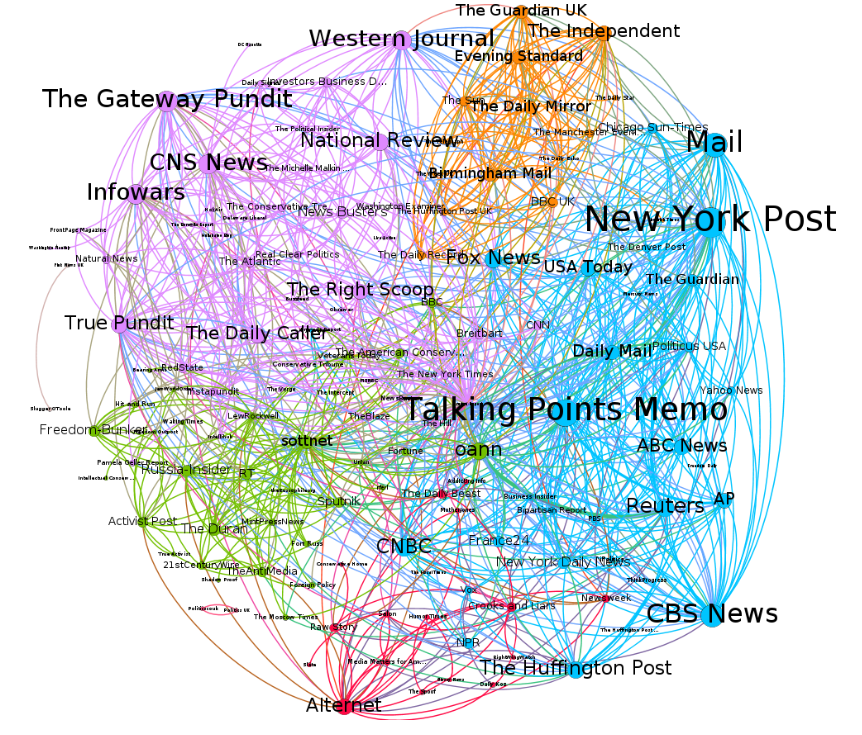
News Landscape and Misinformation
In this project, we study the news landscape by investigating its agents (news producers) and the relationships between them. In particular, I am interested in identitying behavioral and linguistic trends that specific groups of news producrs exhibit, and how to leverage such trends to better understand the landscape and predict sources of misinformation.
Lexical Semantic Change
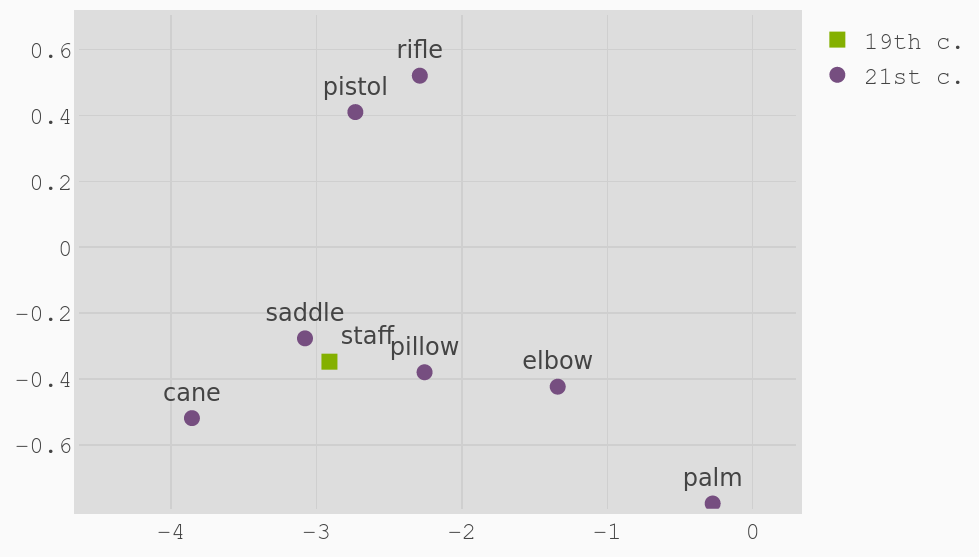
The goal of this project is to understand the process of semantic change in languages across time and space. Namely, how words change meaning by acquiring new senses or losing old ones in an evolutionary sense (as time goes on), but also how semantic differences can be seen across different social groups.
Language-based Reinforcement Learning
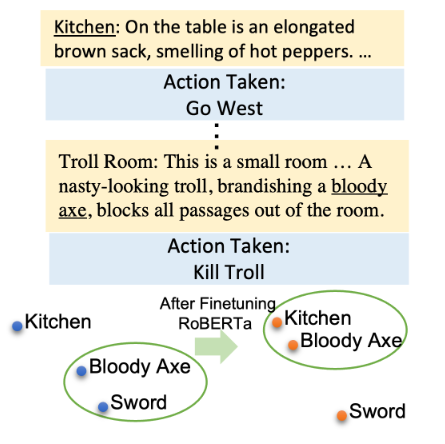
In this project we explore the role of language representation in reinforcement learning settings. In particular, we seek to identify the importance of using the prior knowledge infused into language models during pre-training combined with the task-specific knowledge learned through experience in RL settings such as text adventure (e.g. Zork 1) games and text-based tasks (e.g. TextWorld).
Past projects
Efficient Geometric Simplification
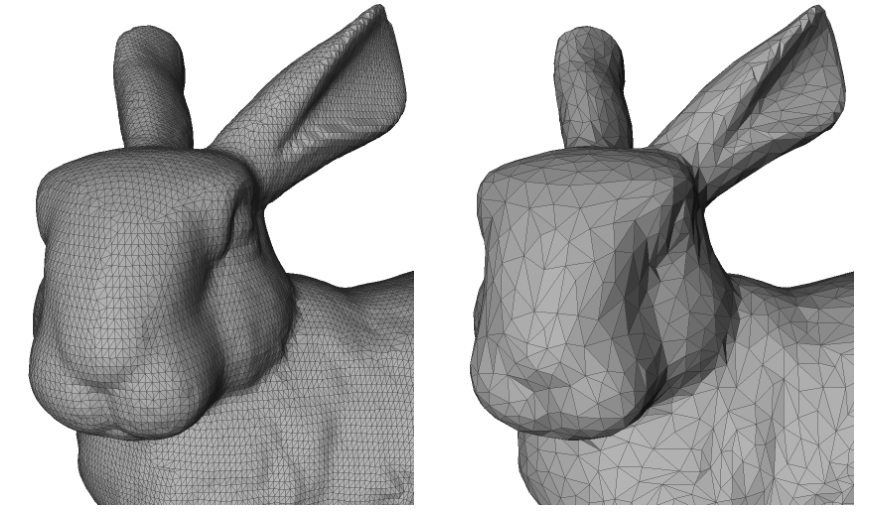
The goal of this project was to develop efficient parallel algorithms to perform 2D and 3D geometric simplification. Simplification is the process of reducing the number of points of a polygon or polyhedron while keeping some desirable attributes (such as ensuring the object still 'looks good'). In addition, I sought to develop topologically consistent methods that avoided round-off errors due to floating point arithmetic. This was done by favoring rational arithmetic over floating point numbers, which turns out to be a much more expensive approach to arithmetic, reinforcing the need for computationally efficient methods make them feasible.
Collaborators
Here are some of the amazing people I have had the chance to work with over the years.
Sibel Adalı, Professor of Computer Science at RPI
Benjamin D. Horne, Professor of Information Sciences at UTK-Knoxville
Milo Trujillo, PhD student at University of Vermont
Clare Arrington, PhD student at RPI
Cody Buntain, Assistant Professor at the University of Maryland
Pin-Yu Chen, Principal Research Scientist at IBM Research
Panayiotis Smeros, Postdoc Research Associate at the University of Bern
Carlos Castillo, Professor at University of Pompeu Fabra
Tomek Strzalkowski, Professor of Cognitive Sciences at RPI
Keerthiram Murugesan, Research Scientist at IBM Research
Subhajit Chaudhurry, Research Scientist at IBM Research
Soham Dan, Research Scientist at IBM Research
Marcus V. Alvim Andrade, Professor of Computer Science at UFV
Salles V. G. de Magalhaes, Professor of Computer Science at UFV
W. Randolph Franklin, Professor of ESCE at RPI